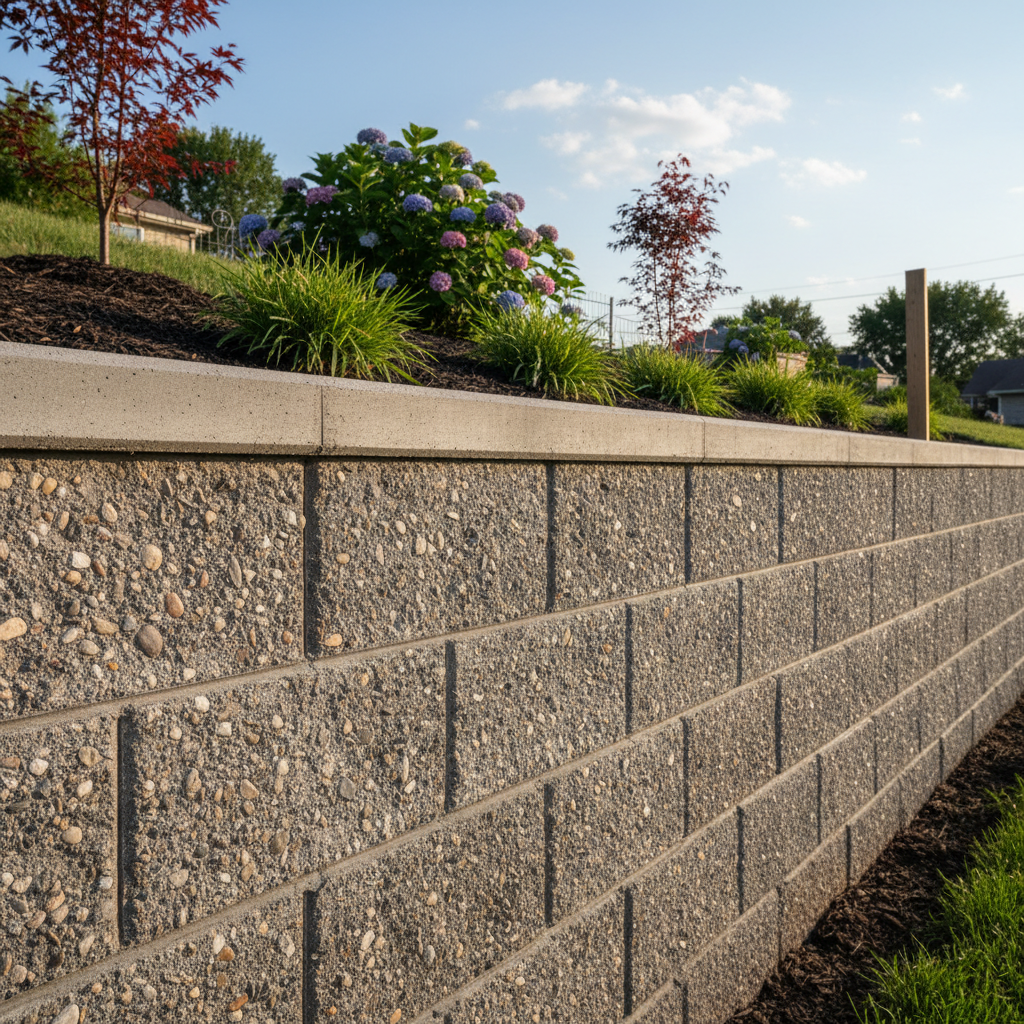
So, you've got a slope in your yard, maybe some erosion, or you just want to create some usable, level space. A concrete retaining wall can be a great solution. But before you jump in, you really need to understand what you're getting into. It's not just stacking blocks; there's a lot more to it, especially here in Kansas City with our clay soils and sometimes wild weather.
Before You Start: Planning & Permits
First things first: planning. You can't just throw up a wall wherever you want, right? Depending on how tall it is and where it sits, you'll probably need a permit from the city. Here in Kansas City, anything over four feet tall usually requires an engineered design and a permit. Even shorter walls might need one if they're close to property lines or other structures. Seriously, don't skip this step; fines and having to tear down your work are a real headache.
And drainage? This is huge. Water is concrete's biggest enemy if it's not handled correctly. You'll need a solid plan for how water will get behind and away from the wall. This usually means a drainage pipe (what we call a 'French drain') and gravel backfill. If you don't do this, water builds up, pressure increases, and your wall will eventually fail. I've seen it happen countless times where folks cut corners here, and it always ends badly.
DIY vs. Calling a Pro: Knowing Your Limits
Okay, let's be real. Can you DIY a concrete retaining wall? For small, decorative walls, maybe. If it's under two feet, not holding back a lot of soil, and not critical for structural support, you might be able to handle it. You'd be looking at something like concrete block or pre-cast pavers, not poured concrete.
But for anything substantial – say, over three feet, or if it's holding back a significant slope, or supporting a driveway or patio – you absolutely need a professional. Here's why:
- Engineering & Design: Like I mentioned, taller walls need an engineer's stamp. That's definitely not a DIY job.
- Excavation: Digging a proper trench, especially for a taller wall, is serious work. You'll need heavy equipment, and knowing how to operate it safely and effectively is key.
- Footings: A retaining wall isn't just sitting on the ground. It needs a solid concrete footing that goes below the frost line (which is usually 30 inches deep around here in KC) to prevent shifting and cracking when the ground freezes and thaws. Pouring a proper footing involves rebar, forms, and knowing how to get the right concrete mix.
- Reinforcement: Taller concrete walls need rebar, often horizontally and vertically, tied together to give them strength against the immense pressure of the soil.
- Drainage Systems: Installing the right drainage, including geotextile fabric to prevent clogging, is crucial for longevity.
- Safety: Working with heavy materials, deep trenches, and potentially unstable soil is dangerous. Professionals have the experience and equipment to do it safely.
If you're thinking about a poured concrete wall, that's definitely a job for Precision Concrete. We've got the forms, the equipment, and the know-how to pour a monolithic, reinforced wall that'll stand the test of time. It's a different beast than stacking blocks, believe me.
During the Project: What to Watch For
If you're hiring a pro, make sure they're licensed and insured. Ask for references and check out their past work. A good contractor will talk you through the design, permits, and drainage plan. They should be clear about the materials they're using and why.
If you're doing a smaller DIY wall, pay close attention to your base. It needs to be level, compacted, and well-drained. Use a good quality base material, like crushed gravel, and compact it thoroughly. Every course of blocks needs to be level, both front-to-back and side-to-side, or your wall will lean and look terrible.
After the Project: Maintenance & Care
Once your retaining wall is in, whether you built it or had us do it, it's pretty low maintenance. Just keep an eye on the drainage. Make sure the weep holes or drainage outlets aren't clogged with leaves or dirt. If you see any cracks developing, especially large ones or ones that are growing, don't ignore them. Small cracks might just be cosmetic, but bigger ones could indicate a structural issue.
Also, avoid planting large trees or shrubs too close to the wall. Their roots can grow and put pressure on the structure over time, leading to damage. Keep an eye on the soil behind the wall too; if it starts to settle significantly, you might need to add more fill.
A well-built concrete retaining wall is a fantastic investment for your property. It adds usable space, prevents erosion, and can really boost your curb appeal. Just make sure you approach it with the right knowledge and respect for what the job entails.