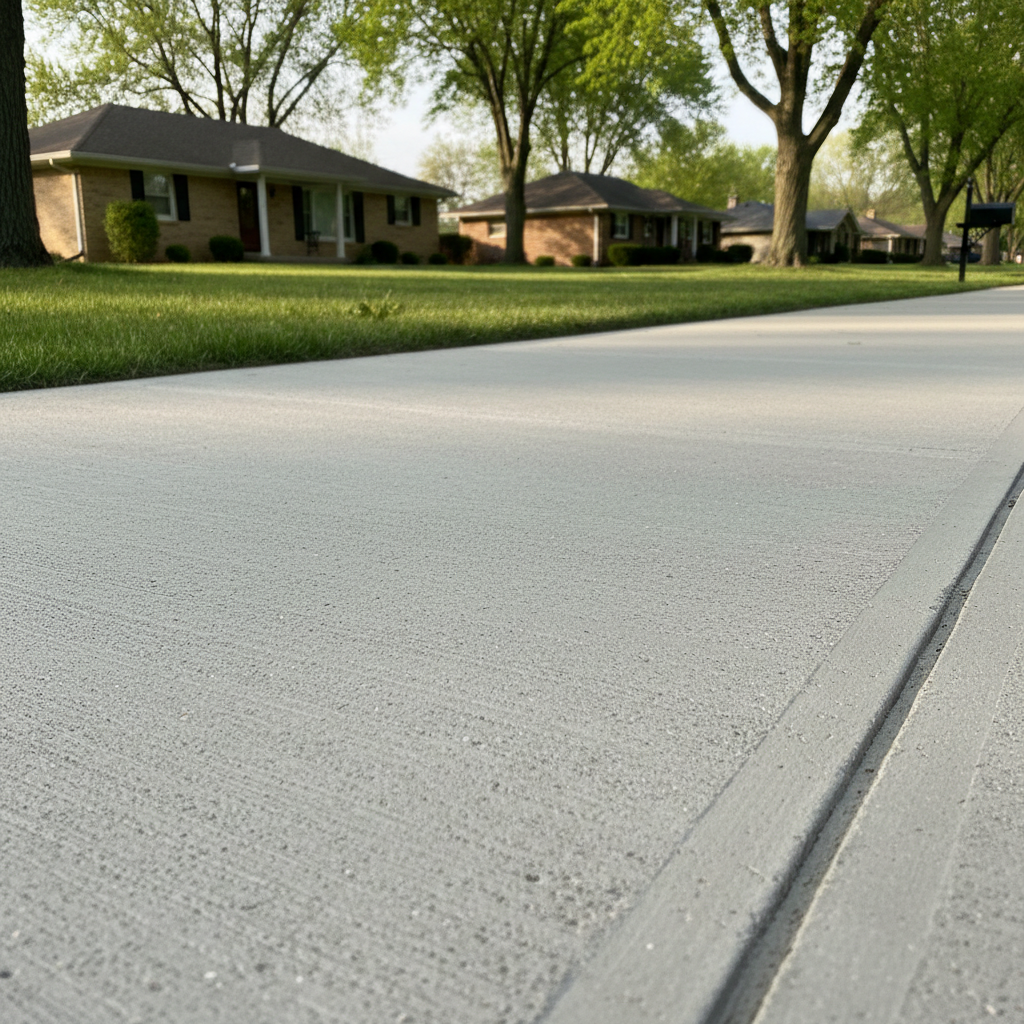
If you own a home around Brookside or Overland Park, you have probably looked down at your front walkway one morning and wondered why it is suddenly shifting or cracking. Sidewalks take a lot of wear and tear in our local climate. Between heavy clay soils that swell and shrink and our freezing winter nights, concrete movement is just part of life here. Precision Concrete gets asked the same handful of questions by homeowners trying to figure out what to do with a broken or sinking path. We will walk through the straight answers without any sales gimmicks.
Who is actually responsible for repairing a damaged sidewalk?
In most KC metro municipalities, the property owner is legally responsible for maintaining the sidewalk adjacent to their lot, even if it technically sits on the city right-of-way. If a slab lifts up and creates a trip hazard, you are usually the one facing the code violation or liability claim if someone takes a spill. Always check with your local public works department, as a few neighborhoods or cities occasionally run cost-sharing programs, but assume the fix starts in your pocket.
Can my sunken sidewalk be lifted, or do I need a total replacement?
You do not always need to tear everything out. If the concrete is structurally sound and just sitting unevenly due to soil settlement, mudjacking or polyurethane foam injection is usually a great option. Precision Concrete pumps a material underneath the slab to raise it right back up to grade for a fraction of replacement cost. But if the concrete is shattered into a dozen pieces, crumbling from salt damage, or severely spalling, grinding or lifting will not save it. That is when you need to pour a new Sidewalk in Kansas City.
What does a new concrete sidewalk actually cost in Kansas City?
Most residential Sidewalk installations and Sidewalk replacements run anywhere from $8 to $15 per square foot, depending on demolition needs, site access, and prep work. If you have got an old, thick path that needs breaking up and hauling off, that adds labor overhead. Do not just look for the lowest bidder on a per-square-foot basis. Ask what kind of sub-base they are packing down, because throwing concrete straight onto raw KC clay without gravel is a recipe for cracking within two years.
Do I need a permit to replace my sidewalk?
If you are replacing an existing Sidewalk on the exact same footprint and grade, most local municipalities do not require a permit. However, the rules change if you are widening the path, adding a brand-new curb cut for a driveway approach, or messing with public drainage patterns. If your project crosses into public right-of-way zones or commercial specs, expect to pull permits and pass inspections.
Why does concrete crack so fast around here?
It mostly comes down to two things: water and clay. Kansas City soil contains a high concentration of expansive clay that swells when we get heavy spring rains and shrinks during dry summer droughts. Add in our winter freeze-thaw cycles where water slips into tiny pores, freezes, and expands, and you get relentless pressure on rigid materials. Proper control joints help dictate where that stress relieves itself, which is why saw-cut or hand-tooled joints are not optional for a Sidewalk in Kansas City.
How long do I have to stay off a freshly poured walkway?
You can usually walk carefully on a new residential Sidewalk after 24 to 48 hours, depending on daytime temperatures and humidity. Keep your pets off it, too, as small paws can easily gouge fresh cream. If you are rolling a heavy wheelbarrow or driving anything over it, wait at least a week to seven days. Concrete cures chemically, not just by drying, and it takes about 28 days to reach its full compressive strength.