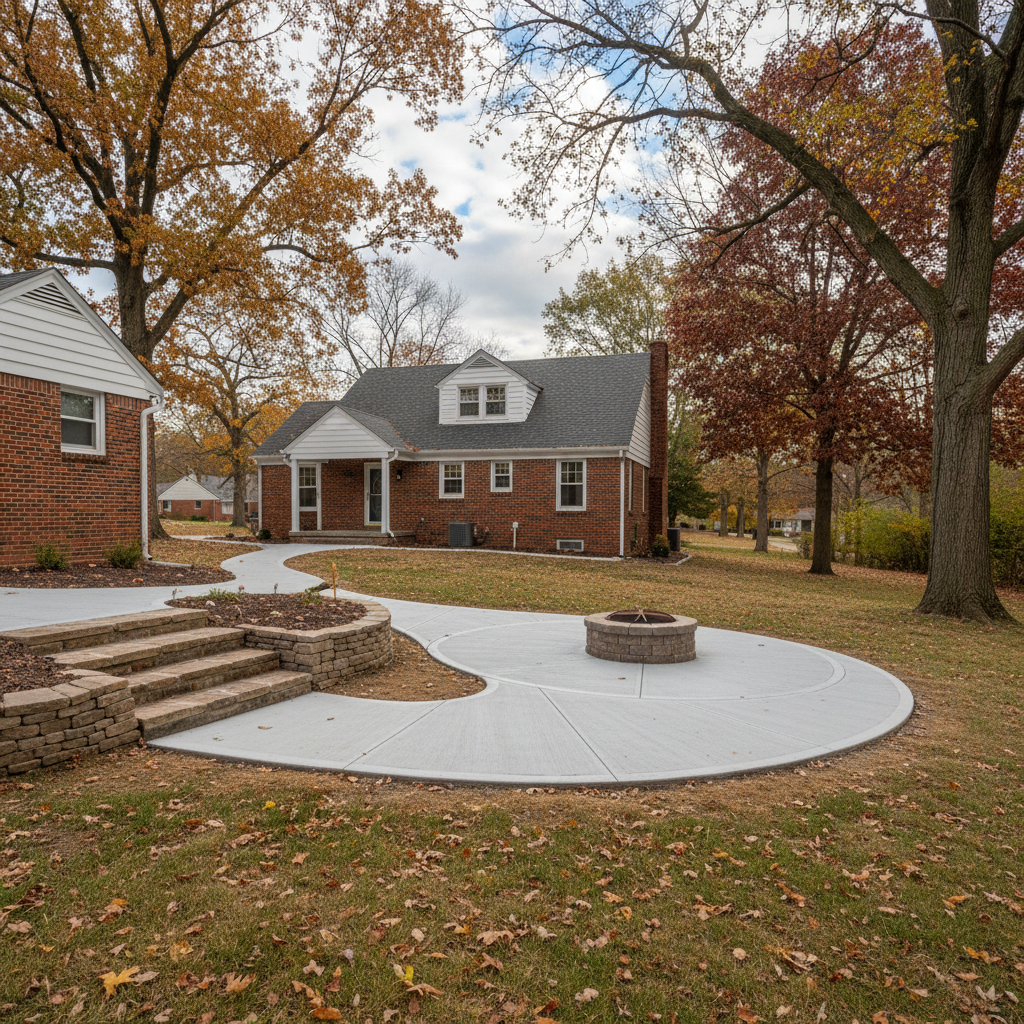
Got concrete problems? You're definitely not alone. Around here, with our wild freeze-thaw cycles and clay soils, concrete really takes a beating. Folks often ask me, "When's the best time to fix this mess?" It's a fair question, and the answer isn't always as simple as "whenever you notice it." Timing really makes a difference if you want those repairs to actually last.
Understanding KC's Climate and Your Concrete
Kansas City weather is, well, *unpredictable*. We might have 70-degree days in February and then snow in April. This constant up-and-down, especially the freezing and thawing, is brutal on concrete. Water sneaks into tiny cracks, freezes, expands, and makes those cracks bigger. Then it thaws, and the whole cycle just repeats. That's how a small hairline crack quickly turns into a real trip hazard.
Our clay soils don't exactly help things either. They swell when wet and shrink when dry, which can cause slabs to shift and settle unevenly. If your driveway or patio was built on poorly prepared ground, you're going to see issues sooner rather than later. So, when you're thinking about repairs, you really have to consider what the ground and the air are up to.
The Best Time for Concrete Repair: Spring & Fall
Generally speaking, the sweet spot for most concrete repair work is spring and fall. Here's why:
Moderate Temperatures: Concrete cures best when temperatures consistently hover between 50 and 70 degrees Fahrenheit. In spring (think late March to early June) and fall (late September to early November), we usually get these perfect conditions. It's not too hot, not too cold. This lets the concrete dry and strengthen properly, cutting down the risk of cracking or weakening while it's curing.
Less Extreme Weather: You definitely want to avoid heavy rains, scorching sun, or freezing temperatures right after a repair. Spring and fall give us a better shot at a stable weather window. Pouring concrete in the middle of a July heatwave, for instance, means it'll dry way too fast, which can cause surface cracks. Trying to do it when it's below freezing? Forget about it; the water in the mix will freeze before it can properly bond.
Ground Stability: In spring, the ground has typically thawed out completely, and while it might be a bit wet, it's generally more stable than in the dead of winter or the dry, cracked earth of late summer. Fall offers similar stability as temperatures cool down but haven't yet frozen solid.
When to Avoid Concrete Repair (If You Can)
I'd tell you to steer clear of major concrete repairs during these times, if you have the choice:
Deep Winter (December - February): It's just too cold. Concrete needs warmth to cure right. While some specialized cold-weather mixes and techniques exist, they add cost and complexity, and the results aren't always as good as repairs done in milder temps. Plus, digging in frozen ground is a nightmare.
Peak Summer (July - August): The intense heat can make the water in the concrete mix evaporate too quickly, leading to what we call 'plastic shrinkage cracks.' It also makes the concrete set too fast, which can be tough for proper finishing. If you absolutely have to do it, you'll need to take extra precautions like misting and shading, but it's not ideal.
Now, I get it, sometimes you just can't wait. A dangerous trip hazard on your front walk in January needs to be addressed, no question. In those cases, we adapt. We'll use accelerators, insulated blankets, and other methods to protect the concrete. But if it's something you can plan for, aim for spring or fall.
Protecting Your Concrete Investment Year-Round
Once your concrete is repaired or newly installed, you want to keep it looking good and performing well. Here's what you can do:
Seal It: This is probably the most important thing you can do. A good quality sealer soaks into the concrete, making it less porous. This means less water gets in, which directly fights against that freeze-thaw damage we talked about. I recommend sealing new concrete within a month or two of installation and then re-sealing every 2-5 years, depending on the product and how much traffic it sees.
Clean It: Keep your concrete clean. Dirt, grime, and especially organic stuff like leaves and spilled chemicals can wear down the surface over time. A simple power wash once a year can make a big difference.
Mind the Drainage: Make sure water drains away from your concrete slabs and foundation. If water is pooling against your driveway or patio, it's going to find its way underneath and cause problems. This is especially true for homes in older KC neighborhoods like Waldo or Brookside where the grading might not be perfect.
Address Cracks Early: Don't let small cracks become big problems. If you see new cracks forming, especially in winter, give us a call. Sometimes a simple caulk or crack filler can prevent a much larger, more expensive repair down the road.
Be Careful with De-icers: Many de-icing salts, especially those with ammonium nitrate or ammonium sulfate, can severely damage concrete. Look for de-icers that are concrete-safe, often those with calcium chloride or magnesium chloride. Better yet, use sand for traction when you can.
At Precision Concrete, we've seen it all, and we're here to help you make smart choices for your property. Don't hesitate to reach out if you've got questions about your concrete, no matter the season. Getting the timing right can save you a lot of headaches and money in the long run.