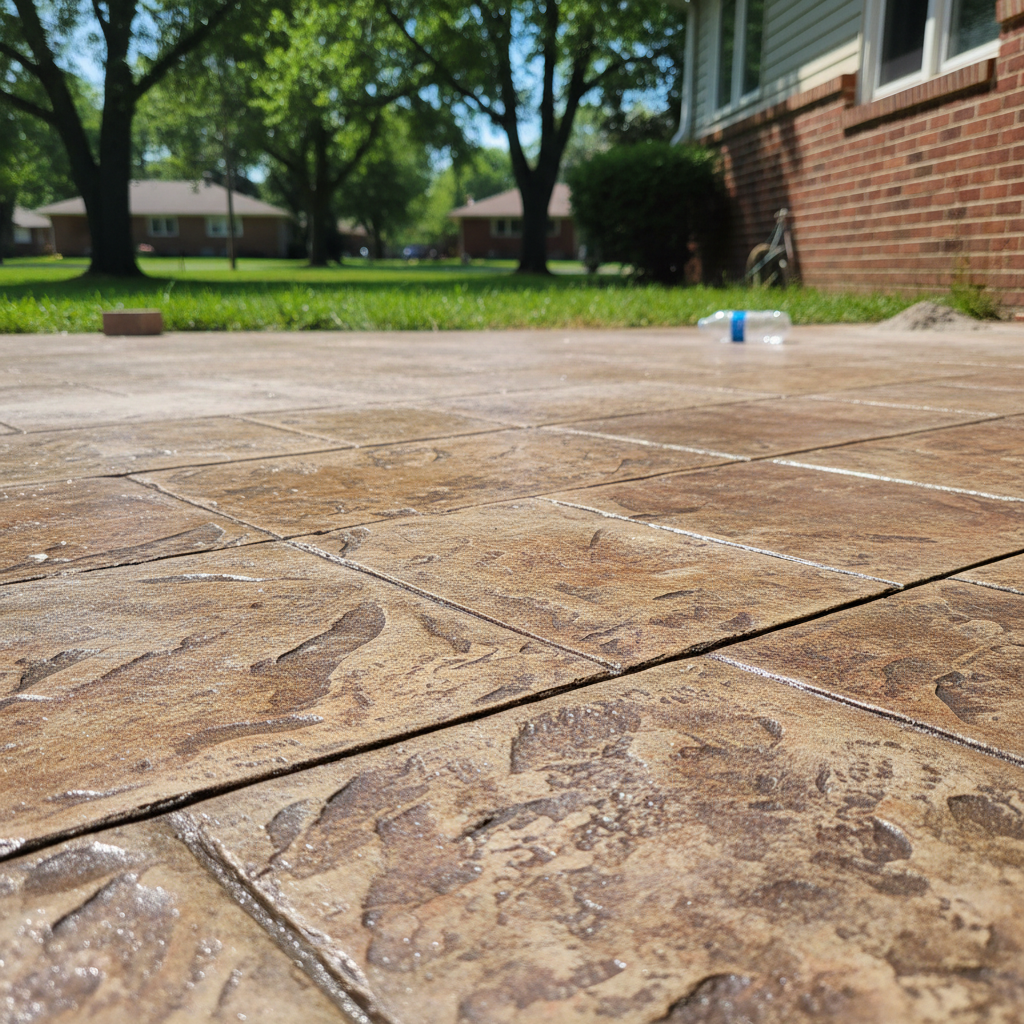
Alright, let's talk stamped concrete. It's a popular choice around here, and for good reason—it looks great. But I get a lot of the same questions from folks in Kansas City who are trying to figure out if it's the right move for their patio, driveway, or walkway. So, I figured I'd just lay out the answers to those common questions right here. No fluff, just what you need to know.
What exactly is stamped concrete?
Simply put, it's concrete that's been patterned and textured to look like other materials. Think brick, slate, flagstone, or even wood. We pour the concrete, and while it's still wet, we press large, flexible mats—the 'stamps'—right into it. Before that, we usually put a color hardener on the surface, then a release agent. That agent helps the stamps come off clean and adds a secondary color, which really gives it that natural, varied look. Once it's cured, we clean it up and put on a sealer to protect it and make those colors pop. It's a way to get a high-end look without the higher cost and upkeep of natural stone, you know?
How long does stamped concrete last in Kansas City?
That's a big one, especially with our crazy Kansas City weather. If it's installed right—and by that, I mean good base prep, the proper concrete mix, and correct sealing—and you take care of it, stamped concrete can easily last 20-30 years. Sometimes even longer. The biggest factors are proper sealing and maintenance. Our freeze-thaw cycles here can be brutal on concrete, so a good sealer is your best friend. It keeps moisture from getting in, which is what causes a lot of the damage when water freezes and expands in the concrete. Don't skip on resealing every few years, and you'll get a lot of life out of it.
Is stamped concrete slippery, especially when wet or icy?
This is a valid concern, especially for patios or pool decks. The truth is, any smooth, hard surface can be slippery when wet, and concrete is no exception. However, with stamped concrete, we can add a non-slip additive to the sealer. It's usually a fine grit that gets mixed into the sealer before we put it on. You won't really see it, but it creates a slightly textured surface that significantly improves traction. It's something we always discuss with our clients at Precision Concrete, especially for areas that get a lot of foot traffic or are near water. So, no, it doesn't have to be a slip-and-slide.
What kind of maintenance does it need?
It's not maintenance-free, but it's not a huge chore either. The main thing is regular cleaning and periodic resealing. For cleaning, just sweep it off regularly and hose it down. For tougher spots, a mild detergent and a soft brush will do the trick. Avoid harsh chemicals or pressure washers on full blast, as they can damage the sealer. The big one is resealing. Depending on traffic and sun exposure, you'll want to reseal every 2-5 years. If it starts looking dull or the color seems to fade, that's usually a sign it's time. It's a simple process, and you can even do it yourself if you're handy, or have us come out to take care of it.
Can stamped concrete crack?
Look, it's concrete. Concrete cracks. It's just a fact of life. We do everything we can to minimize cracking—proper sub-base preparation, the right mix, and most importantly, control joints. These are those lines we cut into the concrete; they're designed to give the concrete a place to crack predictably, usually along those lines, so you don't get unsightly, random cracks all over. Even with all that, a hairline crack or two might show up over time, especially with the expansive clay soils we have in parts of Kansas City. It's usually not a structural issue, and often, the pattern of the stamped concrete helps to camouflage them. If you see significant cracking, that's when you should give us a call.
How does the cost compare to other materials?
This is where stamped concrete really shines for a lot of homeowners. Generally, it's more expensive than plain poured concrete, but it's usually a lot less expensive than putting in natural stone, pavers, or brick. You're getting the look of those high-end materials without the premium price tag for the materials themselves and often for the labor too. Plus, you don't have the weed growth you get between pavers, which is a big win for many folks. It's a great value if you want that custom, decorative look without breaking the bank.
What colors and patterns are available?
The options are pretty vast. For patterns, you've got everything from ashlar slate and flagstone to cobblestone, brick, wood plank, and even more intricate designs. For colors, we use color hardeners and release agents that come in a huge range of shades. We can mimic the grays of natural stone, the reds of brick, the browns of wood, or even create custom blends. You can get really creative with it. We always show samples so you can see and feel the different textures and colors. It's probably the most fun part of the process for homeowners, picking out the look that's just right for their home.
So, there you have it. Stamped concrete is a fantastic option for adding curb appeal and functionality to your Kansas City home. It's durable, looks great, and with a little care, it'll serve you well for decades. If you've got more questions or want to talk about a project, don't hesitate to reach out to us at Precision Concrete.